Showing posts with label Work-Life Balance. Show all posts

Friday, July 1, 2011

Wisdom from the road: What do you wish you'd learned earlier in life?

I first met Miss Britt when I interviewed her for a Member Close-Up piece at Work It, Mom!, back in 2008. We reconnected when she started writing the "Full Time, All the Time" column there, and finally met in person at BlogHer in 2010. A month ago, she and her family sold their belongings, left their home in Central Florida to spend a year living out of a 24-foot RV while they travel the country. And she's sharing her experience with her readers at her blog, "In Pursuit of Happiness."

Today's post is offers 18 things that she's learned during that first month on the road. They're pieces of wisdom that most of us are looking for but unable to find easily, distracted as we are by the minutiae of daily life. Here are the five things that really struck a chord with me:
  • Time together and time apart are both important for maintaining healthy relationships.
  • What you can provide your children has almost nothing to do with how grateful (or ungrateful) they will be.
  • Don’t put stuff off. Just do it, even if you think the outcome or news will be bad.
  • People and places can surprise you. Even if you don’t have the time to learn the back story, remember that there always is one.
  • Being clear about your intentions increases the odds that you’ll be happy with your results – in just about anything.
Click through to read Miss Britt's entire post and follow her adventures. But first, tell me: What's one you've learned that you wish you'd understood earlier in your life? (For me, it's the fact that the little things in life are the big things.)

Thursday, June 30, 2011

My kids think I work too much

I truly believe that work-life balance is a myth—at least, in the long-term. One might achieve it for short bursts here and there, but in general I think it's less about balance and more about juggling. Some times, the only balls that stay in the air are the ones related to your job, the ones labeled "deadline" and "business meeting" and "massive project," and by the end of the day all you can do is make promises about tomorrow being better. Other times, the most important meeting on your schedule is the one with your child's teacher or the daytime date with your spouse—or you're tapping away on the computer with one hand while holding a sick child on your lap, or trying to write a blog post with "Phineas and Ferb" blaring in the background (ahem).

The other day, I was trying to finish an assignment while my daughter was sitting next to me on the couch. I had my laptop open, and she was hunched over the coffee table, drawing and humming a tune that sounded a lot like "Bingo."

When I scooted closer to her on the couch to get a peek at what she was doing, I discovered that she had made up new words to go along with the song. And had made an illustrated guide to the new lyrics (spelled phonetically, of course—she's only in kindergarten).

There was a girl who worked a lot
and Lylah was her name-o
L-Y-L-A-H, L-Y-L-A-H, L-Y-L-A-H
and Lylah was her name-o!


I thought I was doing a pretty good job of getting out of work mode and morphing into Mama mode during the window between school pick-up and bedtime. But apparently not.

Saturday, June 18, 2011

Dear Huma Abedin: Please ignore Vanity Fair's terrible advice. Here's why.

Huma Abedin in Africa last week.
AP Photo via Yahoo! Shine
When I saw the Vanity Fair article offering up advice to Rep. Anthony Weiner's wife, Huma Abedin, this past weekend, my jaw just dropped. It seemed straight out of the 1950s: Don't worry about your career, you're pregnant. Think of your baby. Spend more time with your husband. All well and good, but really? What if she can't just dial back her job? And doesn't "spend more time with your husband" imply that his tweeting X-rated photos of himself to strangers is somehow her fault?

Here's my take on Vanity Fair's advice; you can read the full story, "Rep. Anthony Weiner's wife Huma Abedin doesn't need advice like this," over at Yahoo! Shine.

Friday, June 17, 2011

"Go the F*ck to Sleep" by Adam Mansbach says what most parents are thinking

My 4 1/2 doesn't need much sleep, and his oldest sister, who is now nearly 18, has always been prone to bouts of insomnia. I've probably chanted some variation of the title of Adam Mansbach's new book, "Go the F*ck to Sleep," silently to myself countless times for more than a decade.

As you can tell from the title, this is not a children's book, in spite of the gorgeous illustrations by Ricardo Cortes (who, like Mansbach, grew up in Newton, Mass., and whom Mansbach was friends with in high school and college. (Full disclosure: I worked for years with Mansbach's father, who is an editor at The Boston Globe, though he's not the one who told me about the book.)

After Mansbach gave a reading at the Fourth Wall Arts Salon in Philadelphia on April 23, pre-orders of the book, which was then slated for publication in October, skyrocketed. A PDF was leaked online, and within days it was number 2 on Amazon's best-seller's list with more than 100,000 copies pre-ordered—all months before the book was even available. The small publisher moved the publication date to this week, with a launch at the New York Public Library. The day before, I had a chance to chat with Mansbach about the publishing phenomenon his book has become. You can read my interview with Adam Mansbach over at Yahoo! Shine.

Like the book, this video of his reading in Philadelphia is not meant for little kids (it's probably safe for work if you have a good set of ear phones, though), but it's definitely worth checking out, as is the Amazon.com Audiable version of "Go the F*ck to Sleep" with Samuel L. Jackson (of "Pulp Fiction" fame) narrating.


While I've been saying that this is the book many parents may wish they themselves had written, my friends at Babble.com bring up an excellent point. Though plenty of women relate to the idea behind the book, author Amy Sohn asks, "What if a mom had beaten a dad to the punchline and published a book called Go the F*ck to Sleep?" The consensus is that the reaction probably wouldn't have been pretty:

Apparently, even though we’re in this age of How Much Parenting Sucks and How Hard It Really Is, the Good Mother archetype still reigns supreme. As Connors puts it, “Any woman that exposes the uglier side of parenting or even humorously disparages motherhood gets a lot of blowback. There’s this powerful idea that mothers should be good. Dads are not held to that same standard so they have more leeway to be irreverent and dark and ridiculous.” All those voices ‘fessing up on the Internet for the past decade haven’t changed much about mothers’ perceptions of themselves and each other. “In the view of most readers,” says Babble contributor John Cave Osborne, “it’s OK for a dad to write a book like Go the F*ck to Sleep but not a mom. People think a clueless or inept dad is funny. That shtick still works, even though dads have come a long way since Ward Cleaver.”
Check out the video, read my post at Shine, and decide for yourself: Is humor simply humor, no matter who writes it? Or does the book work because it plays into our preconceived notions of what a dad can or can't handle?

Thursday, June 9, 2011

Tuesday, June 7, 2011

The trick to a long life: Being able to rebound from stress

You've heard about amazing centenarians who swear that they reached their 100th birthday thanks to their good genes. Or clean living. Or selectively dirty living. Or the glass of wine a day that killed the germs. Or the weekly cigar that did the same. Or the strict exercise regimen that kept them running until their grandkids had kids of their own.

But researchers say there may be another reason: They live longer because they learned how to not just manage stress, but rebound from it.

There's a direct link between psychological stress and biological aging, says Thea Singer in her new book, "Stress Less: The New Science That Shows Women How to Rejuvenate the Body and the Mind." And, as I point out at The 36-Hour Day and Yahoo!'s Shine, that link goes all the way down to our cells.

In a groundbreaking study, 2009 Nobel Prize-winning cell biologist Elizabeth H. Blackburn, Ph.D., and health psychologist Elissa S. Epel, Ph.D., both at the University of California, San Francisco, discovered that that chronic stress "literally gnaws at our DNA—its tips, or telomeres, to be precise—speeding up the rate at which our cells age." In fact, Singer says, "Women who perceived themselves as being under the most stress had telomeres that were shorter by equivalent of 10 years."

Monday, May 23, 2011

On hope, and finding lost things

When my now 6-year-old daughter was a baby, my mom gave her a fuzzy cream-colored toy Easter bunny that my daughter, for whatever reason, named Minno.

Minno quickly became a permanent fixture in our lives, traveling with us to and from that hectic early-evening childcare hand-off my husband and I had, snuggling with our daughter at bedtime, even occupying the high chair with her. I quickly realized that all hell would probably break loose when (not if) the bunny got lost, and decided to get a couple of identical backups. Which is when I discovered that the bunny had been discontinued a couple of years earlier.

Monday, May 9, 2011

3 ways to avoid e-mail overload

Juggling a full-time job with a freelance career means that I have several email address. I consolidate them to an extent, having most of them forward themselves to my main real-life account (thank you for that, gmail). But avoiding email overload is a challenge.

As I've mentioned before, my inbox can get out of control. Also: I work with a great team of people who are scattered across the U.S., which means that I can't use the cool trick that Nataly and Miss Britt love; if I don't check my email first thing in the day, I don't know what the California part of my team was discussing after I logged off last night, or whether there's a last-minute news story I'm supposed to cover ASAP. Since my teammates are spread far and wide, if we're not emailing one another then we're instant messaging (and that's in between the twice-daily teleconferences), so I can't check email only at set times.

What's a busy working mom to do?

Thursday, April 28, 2011

5 workplace rules to follow, even if you work from home

I saw these 5 office etiquette rules at CBS Moneywatch, and they got me thinking about what rules would be on my list if I was the one to wield supreme executive power at the office. Then I realized: Since I work from home now (except when I'm traveling), I guess I do have the power to issue my own etiquette laws, after all. And so here they are: 5 rules to remember—regardless of where your office is.

Thursday, April 21, 2011

Ways to keep your kids occupied at a restaurant (or during any long wait)

We've been working on "restaurant manners" with our youngest kids (the teens and tween have it down pat by now), but even the most well-behaved kid can get bored while waiting for the food to arrive. Yes, you could always hand them your cell phone or pull out the video games, but sometimes, non-noisy and low-tech is the way to go.

Tuesday, April 12, 2011

Political math and Planned Parenthood: Rounding 3 percent up to "well over 90 percent"

I was laughing along with the rest of the audience while watching "The Colbert Report" last night. And then, today at work, I ended up having to write about the news behind a few of his quips. You can read the whole post over at Shine, but basically: Last week, during the budget standoff, republican Senator John Kyl of Arizona stood before Congress and said: "You don't have to go to Planned Parenthood to get your cholesterol or your blood pressure checked. If you want an abortion, you go to Planned
Parenthood, and that's well over 90 percent of what Planned Parenthood does."

Except that... it's not. Not by a long shot.

Wednesday, April 6, 2011

Teaching kids the value of money? Or just bribing them?

My youngest kids have discovered the value of money and, since I've been trying to instill in them the value of earning money, rather than just receiving money, right now they're all about doing random chores for a quarter.

"Mama, can I earn some monies?" my 4-year-old son asks, dish rag in hand just in case I say yes.

"I made my bed this morning! All by myself! Without anyone telling me to!" chirps my 6-year-old daughter. "Is that worth a quarter? Or is it worth two quarters?"

They're careful about depositing their quarters in their piggy banks, and they're probably ready for a trip to the real bank to open a real savings account. And, as I mentioned last month over at The 36-Hour Day, I'm thinking they may be ready to start getting an allowance, even if they're too young to have anything to spend it on. But while I contemplate how often and how much, I've noticed that I'm starting offer up a quarter here or there in exchange for a minute or two of peace.

Thursday, March 31, 2011

Why does the wage gap still exist? Because workplace discrimination still exists.

I was thrilled to be in Washington, D.C., yesterday, to speak with White House senior adviser Valerie Jarrett, the chair of the White House Council on Women and Girls, and Preeta Bansal, General Counsel and Senior Policy Adviser at the Office of Management and Budget in the Executive Office of the President, about issues concerning women and the workplace. If you missed the live half-hour event, which was livestreamed at whitehouse.gov and on the White House's Facebook page, you can watch the video of it right here:


I spent more than a week collecting questions from members of the Shine community, and asked both administration officials about the ones that most of Shine's readers are most concerned about: Why the wage gap between men and women still exists, whether companies will be encouraged to be more family-friendly, what initiatives are being put in place to make it easier for women to rejoin the work force, and whether there are any plans to find better ways to encourage and support the efforts of single mothers who are trying to live without resorting to government handouts. I also took questions from the live Facebook audience about women and finances, education, and work-life balance.

When it comes to the wage gap -- the fact that women continue to earn as much as 25 percent less than men for doing comparable work in certain fields -- there's no single easy solution.

"Well, there are a variety of reasons, a variety of different factors," Jarrett told me. "We have to encourage our young girls to go into fields that lead to profitable careers."

"Women are still carrying the burden of family," she pointed out. "Women aren't able to spend as much time as work [as men] because they have all these other committments and responsibilities. And then another factor is that we still have discrimination in the workplace."

To encourage change, "part of what we've been doing here at the White House, as part of the Council of Women and Girls, is to highlight best practices." Jarrett said. "Employers who have flexibility in the workplace are more productive."

Watch the video above, and be sure to click over to the Manage Your Life section at Shine as we continue the discussion there!

Friday, March 25, 2011

Ask the Obama Administration about women, education, and workplace issues

I'll be in Washington, D.C., on Wednesday, March 30, to chat with White House officials about issues that affect women in education, employment, and work-life balance. I've been collecting questions from Shine readers and Facebook users, and I'd love it if you'd leave yours in the comments here: What do you want us to ask the Obama Administration about women in the workplace, education, or work-life balance?

Earlier this month, the White House published "Women in America: Indicators of Social and Economic Well-Being," the first comprehensive federal report since 1963, when President Kennedy's Commission on the Status of Women, chaired by Eleanor Roosevelt, was released. The 2011 report pulls together data from a variety of sources and studies, offering a big-picture view of the issues women face today, and how women's lives in the United States has changed over time.

At 5:05 p.m. (Eastern Time), I'll be talking about the report with senior adviser Valerie Jarrett, the chair of the White House Council on Women and Girls, and Preeta Bansal,General Counsel and Senior Policy Adviser at the Office of Management and Budget in the Executive Office of the President. Our conversation will be livestreamed at whitehouse.gov and on the White House's Facebook page (I'll be taking questions from the live audience, too, if there's time!). And you can also watch it right here at WriteEditRepeat!


Tune in! And in the meantime, let me know: What concerns do you have about women, education, and workplace issues in America today?


Sunday, March 20, 2011

Did parenthood change the way you view your job?

Lara Logan in Iraq / CBS News photoAfter watching this "60 Minutes Overtime" interview with CBS foreign correspondent Lara Logan -- who was beaten and sexually assaulted in Cairo last month, prompting some media executives to consider pulling their female reporters out of Egypt -- I'm struck by one observation she shares.

In the interview, which aired in September 2010, the 39-year-old journalist describes coming under fire while with US troops in Afghanistan. "I ran for cover. Usually, I would run for the cameraman," she says. "But once you have two little babies at home, you have a little different perspective on things."

As working moms, we're all too aware of how other people may (or may not) perceive us once we become parents. Studies show that the age-old gender gap has been replaced by the motherhood penalty. Some companies woo parents with work-life balance-improving benefits and then penalize employees for using them. We worry that we're seen as slackers if we have to dash out of work to pick up a sick child, or if we can't stay late to work on an important project.

But what we don't often talk about is whether our feelings about our jobs change when we have kids. Not whether we'd rather work from home (or go into an office) or whether we want to downshift from full time to part time or opt out of the workforce entirely. I mean how becoming a parent can influence the work we do, and the risks we're willing to take while doing it.

So, let's talk. Did you view your job differently once you became a parent? What do you do, and how did your perspective change?

Photo: CBS foreign correspondent Lara Logan in Iraq (Photo from CBS News)

Wednesday, March 9, 2011

The Pink Gang: "We're a gang for justice."

Sampat Pal Devi and members of her "Pink Gang." Photo: Barcroft Media
My grandmother, Roda Mistry, was a fierce advocate for women's rights and welfare. A former member of the Raja Sabha in India (the upper house of India's Parliament) and the former Minister of Women's Welfare, she established a college of social work outside of her home city of Hyderabad, India (whoa, there's even a video!), and has a village near there named after her as well. I remember her telling me once, when I was about 7 years old, that if a man and a woman came to her to have her solve a dispute, she'd always side with the woman first and ask questions later. "This is India," she told me when I said that didn't sound very fair. "No one sticks up for the woman first."

She would have been thrilled by the post I have up at Yahoo!'s Shine right now, about the Gulabi Gang. Here's an excerpt:

Friday, March 4, 2011

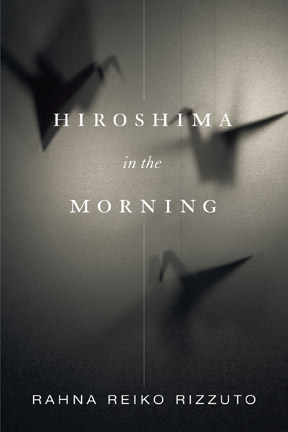
The opposite of a Tiger Mother: A Hiroshima Mom?

At Shine today, I'm writing about Rahna Reiko Rizzuto and her controversial new memoir, "Hiroshima
in the Morning,"
in which she details her decision to walk away from her 20-year marriage and her two sons, who were just 5 and 3 at the time.

She never wanted to be a mother in the first place, Rizzuto admits. "I had this idea that motherhood was this really all-encompassing thing," she explained on the Today Show. "I was afraid of being swallowed up by that." A fellowship to study in Japan for six months made it clear to her that she needed to change her life.

Her relationship with her sons survived her leaving, she says, and she thinks it may even have been improved by it. "In my part-time motherhood, I get concentrated blocks of time when I can be that 1950s mother we idealize who was waiting in an apron with fresh cookies when we got off the school bus and wasn't too busy for anything we needed until we went to be," she writes in an essay at Salon.com. "I go to every parent-teacher conference; I am there for performances and baseball games."

But that 1950s mother she describes as ideal had to cope with parenthood 24/7—she didn't get to pick and choose which parts to be present for. The idea that a mother could love her children and still choose to leave them to pursue her own goals is the antithesis of being a "Tiger Mother"—the omnipresent, perfection-demanding, Eastern-style parent described by Amy Chau. It also goes against our culture's definition of motherhood. But it shines a light on a glaring double standard: When a man chooses not to be a full-time parent, it's acceptable—or, at least, accepted. But when a woman decides to do so, it's abandonment.

The decision isn't an easy one to make, no matter how you feel about parenting. "‪It took me about a year to decide once the idea came to me," says Talyaa Liera. In 2008, after a decade as an attachment-parenting stay-at-home mom, she chose to move 3,000 miles away from three of her four children (her oldest is an adult and out on her own).‪

There's much more; click here to read the entire post at Yahoo!'s Shine. The idea of choosing to leave your children is one that strikes a nerve in many people (as evidenced by the 110+ comments already on the hours-old post).

Edited to add: As of March 9th, the discussion at Yahoo has really grown—16,100 comments and counting. Did the story touch a nerve (or several)? Read the entire post and decide for yourself.

Thursday, February 24, 2011

Should paid parental leave be a perk, or a requirement?

I wrote about the idea of paid parental leave in 2008, when the New Jersey State Senate approved legislation that would grant employees paid maternity or dependent-care leave, making my home state one of just two in the country to mandate paid maternity leave. (California is the other; both states fund the program through small payroll deductions.)

Since then, not only has the situation not gotten better, it's actually gotten worse. That's what we're talking about right now over at The 36-Hour Day.

In a 2005 survey of 168 developed countries, the United States was one of just five that didn't mandate paid maternity leave. Yesterday, a Human Rights Watch report; showed that, out of 190 countries studied, just three offered no legal guarantee of paid maternity leave: Papua New Guinea, Swaziland, and the United States. (Nine countries were unclear about their policy on paid leave for new mothers, and 178 guaranteed paid maternity leave.)

"Being an outlier is nothing to be proud of in a case like this," Janet Walsh, deputy women's rights director of Human Rights Watch and the author of the report, told Reuters. "Countries that have these programs show productivity gains, reduced turnover costs, and health care savings. We can't afford not to guarantee paid family leave under law -- especially in these tough economic times."

Wednesday, February 23, 2011

Setting limits (with myself) while working from home

Once upon a time, I had a proper home office, with a door that closed and everything.

It turned into a nursery.

My next home office later became my oldest stepdaughter's bedroom. My next one was a nook in the master bedroom, with a desk that could barely hold the massive computer monitor from 1998 (it pre-dated three of our five kids) and where I hated to work at night because it was so far away from the hub of the house.

I started roaming around after that, thanks to my best Mother's Day Present ever, and thanks to the fact that I only worked from home a day or so a week. But now I'm working from home 99.9 percent of the time, and even though it's only been a few months, it's cold and flu season, and my pediatrician tells me that the strain winding its way through our local schools isn't one of the ones covered by the vaccine. Which means that it's only a (short) matter of time until I'm working from home with a sick kid or two in tow. And also: I need to find a way to set a few limits.

Not with work -- the team I'm part of has been wonderful. Not with my husband -- he's been nothing but supportive. Not with the kids -- yet. Turns out, the person I really need to set limits with is... myself.

I'm the only one wondering why dinner isn't on the table at 6. And why the laundry is heaped in the bedroom, in piles taller than my kids. The house hasn't been decorated for Christmas, but that's OK, because I don't decorate. But the dog hasn't been brushed (or, for that matter, fed), the floors haven't been vacuumed, and the fridge has not been stocked. And while everyone else is willing to cut me some slack, I'm stressing over the way I haven't seamlessly transitioned into this chapter of my career.

I know I need to create a proper home office with a door that shuts, but that's easier said than done: Even though two out of three of our big kids are teenagers now and rarely spend weeks at a time with us, I'm reluctant to repurpose their old bedrooms. While I'm struggling with that unique step-parenting issue, though, I know I need to tackle my own expectations for myself. I didn't expect that I'd be able to stay caught up on housework all week long while I was commuting, why do I think I should be able to when my commute has disappeared but my workload has increased?

How do you manage your expectations when you're working from home?

Saturday, February 12, 2011

The laws of work-life balance (with apologies to Mr. Murphy)

Some time ago, I wrote a post about the Laws of Working Moms. Well, I'm still a working mom, and not much has changed on that front. But, since I write a lot about work-life balance -- and since my friends like to tease me that I write about work-life balance when I actually have none -- over at The 36-Hour Day I took a few moments to observe how Murphy's law affects my not-at-the-office life.

Read on...